
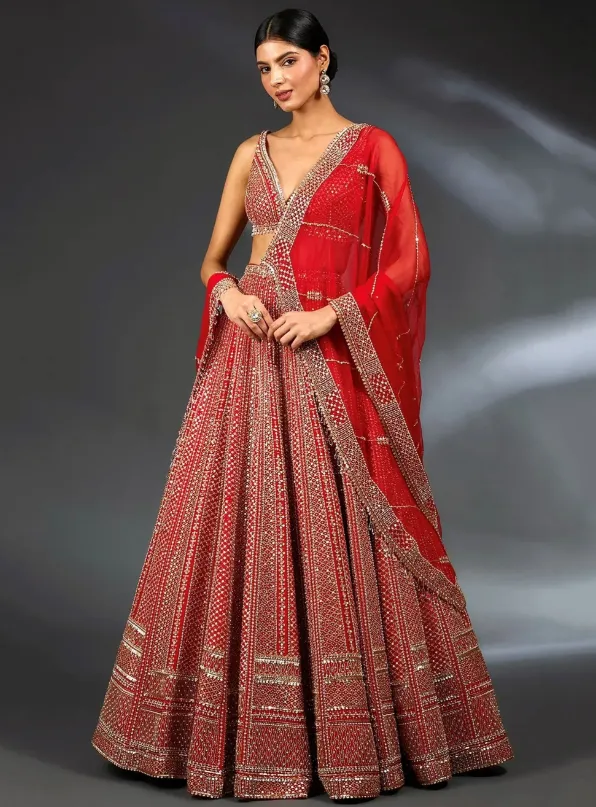
Red has held a special place in Indian bridal fashion for generations, but choosing it today does not mean repeating the same wedding look. A red bridal lehenga can move from deeply traditional to contemporary depending on the shade, embroidery, fabric, blouse, and dupatta. That flexibility is why red continues to work for brides who value tradition while still wanting their wedding outfit to feel personal.
The strongest bridal look usually begins with a clear idea of mood. Some brides want regal velvet and dense gold work; others prefer silk, net, or georgette with lighter embroidery and cleaner lines. Once the mood is decided, it becomes easier to judge every other detail without getting distracted by trends.
Red Is a Palette, Not a Single Shade
Bridal red includes far more than one bright tone. Vermilion, ruby, crimson, scarlet, wine-red, rust-red, and deeper maroon-influenced shades can each create a different presence.
A red lehenga in a brighter tone can feel energetic and traditional, while a deeper shade may look richer in evening lighting. The right choice depends on preference, venue, ceremony timing, and the jewellery planned for the day.
Think About the Wedding Setting
Natural daylight can make brighter reds appear vivid, while deeper reds often gain depth under warm indoor lighting. Instead of selecting a shade in isolation, imagine it against the mandap, flowers, stage décor, and photography environment.
Let the Embroidery Tell the Story
Red provides a strong base, so bridal embroidery should have a clear direction rather than simply covering every inch of fabric. Gold zari, thread embroidery, sequins, stones, floral motifs, and traditional patterns can all work, but the effect changes with placement and scale.
A bride who prefers a classic look might choose repeated motifs with a defined border. Someone wanting a more contemporary result may prefer spaced embroidery, tonal threadwork, or one heavily detailed section balanced by quieter areas.
Useful ways to create balance include:
-
Keeping the skirt richly worked while simplifying the blouse
-
Using a statement border instead of dense embroidery throughout
-
Mixing antique gold with red for a softer traditional finish
-
Adding floral or figurative motifs for a more narrative design
-
Choosing tonal red embroidery when metallic work feels too strong
Build the Bridal Look in Layers
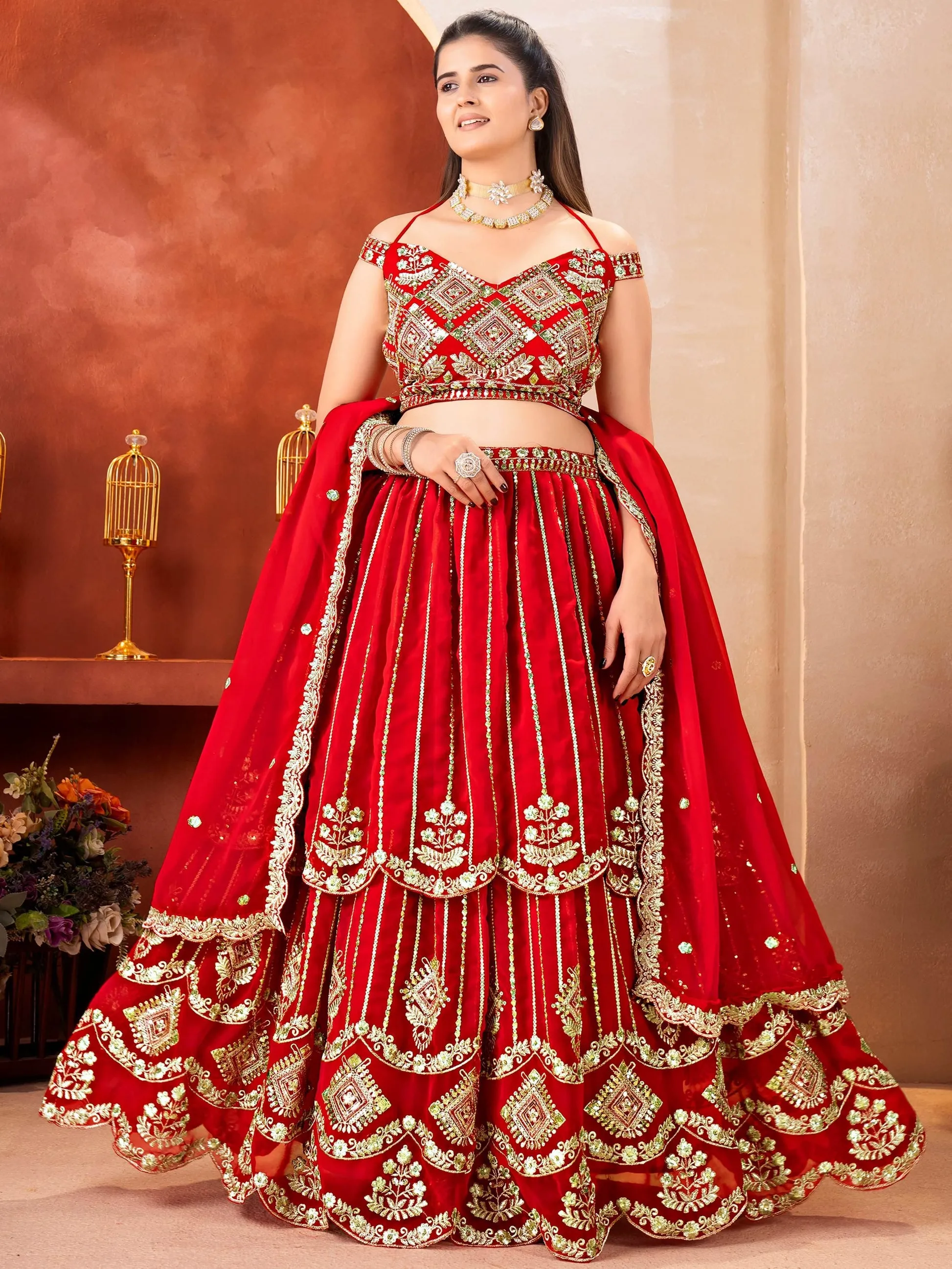
A bridal lehenga is not only a skirt and blouse. The dupatta, veil, jewellery, hairstyle, and footwear all contribute to the final composition.
One Dupatta or Two?
A single dupatta keeps the look cleaner and is easier to manage through long ceremonies. Two dupattas can create a grander bridal frame, with one draped across the body and another used as a veil. If both have heavy borders, the combined weight can become tiring.
Brides should test the complete drape before the wedding day. What looks balanced in a product image may feel different once jewellery, hair accessories, and a veil are added.
Use Jewellery to Support the Lehenga
Red and gold are a familiar combination, but bridal jewellery does not have to match every embroidery detail. Kundan, polki-inspired pieces, pearls, green stones, or antique finishes can introduce contrast.
The neckline should guide the jewellery plan. A heavily embroidered high-neck blouse may need strong earrings rather than a large necklace, while an open neckline can support layered neckpieces.
Keep Bridal Comfort in the Decision
A wedding outfit may be worn through rituals, photographs, greetings, and hours of sitting or standing. That makes construction as important as appearance.
Before finalising the outfit, check:
-
Whether the waistband stays secure while sitting
-
Whether the blouse allows comfortable arm movement
-
Whether cancan or inner layers feel too heavy
-
Whether the skirt clears the chosen footwear
-
Whether the dupatta border pulls at the shoulder
-
Whether jewellery catches on embroidery
These checks help preserve the look without turning the outfit into something the bride is eager to remove.
Make Tradition Feel Personal
Red remains meaningful partly because it can carry tradition without preventing individuality. A bride can keep the classic colour while choosing an unconventional blouse, softer embroidery, a contrasting veil, personalised motifs, or a different jewellery palette.
A family-inspired border, favourite shade of red, heirloom jewellery, or embroidery with personal significance can make the lehenga feel connected to the bride rather than simply fashionable.
Conclusion
A red bridal lehenga does not need to be reinvented completely to feel modern. Its strength lies in how easily a classic colour can adapt through shade, embroidery, fabric, layering, and personal details. Brides can honour tradition while still making deliberate choices about what suits their ceremony, comfort, and style. By treating red as a flexible palette instead of a fixed bridal formula, the final outfit can feel familiar in the best way while remaining distinctive enough to belong to one bride and one wedding day.
