
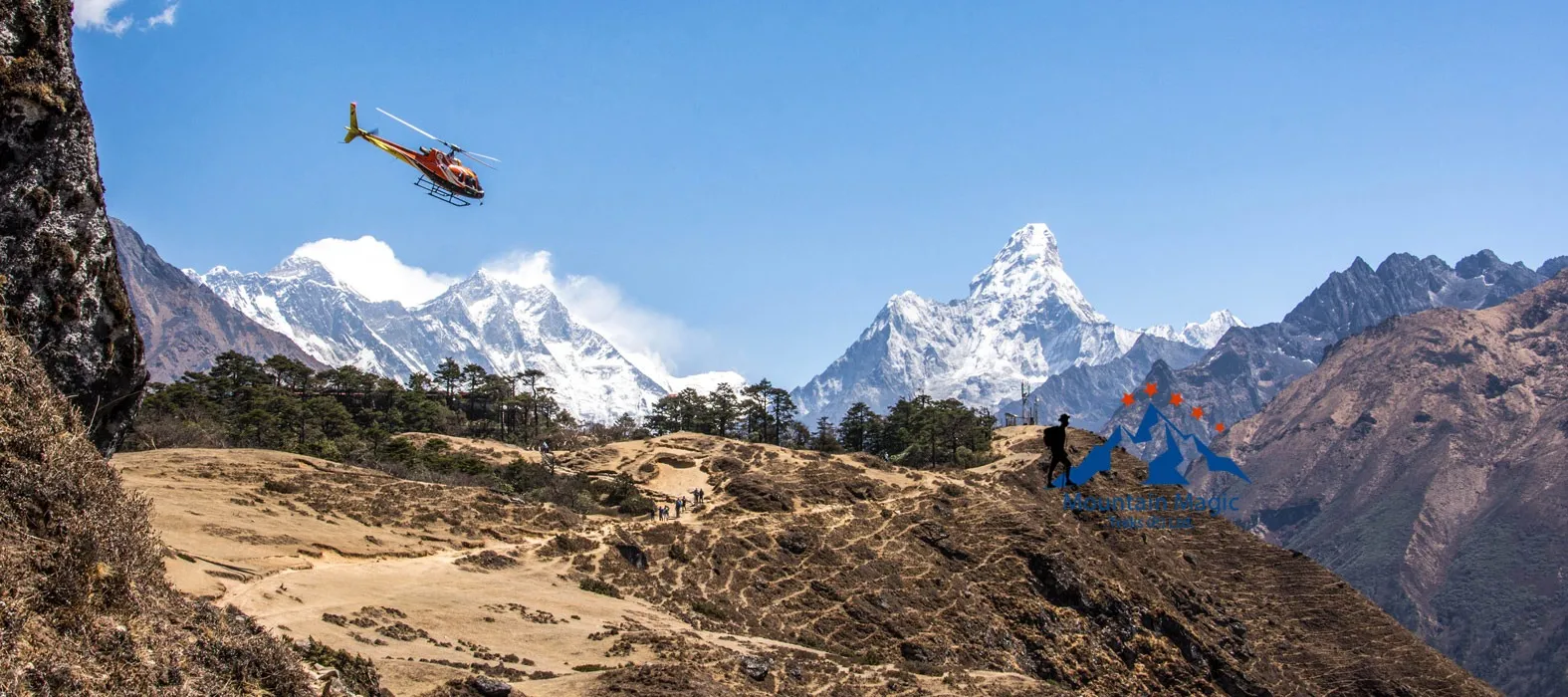
Pangboche is a traditional mountain settlement located along the trail between Tengboche and Dingboche. It sits above the Dudh Koshi valley and provides trekkers with a closer look at the settlements found deeper inside Nepal’s Khumbu region. Its stone houses, mountain surroundings, and position along the main Everest route make it a notable place during the journey.
On the Everest Base Camp Trek with Helicopter Return, Pangboche is part of the walking section that connects the lower Khumbu villages with the higher settlements. Although it may not be an overnight destination in every itinerary, understanding its location helps travelers follow the route and recognize the important places along the way.
Where Is Pangboche Located?
Pangboche lies in the Solukhumbu district of Nepal at approximately 3,985 meters above sea level. It is situated along the main trail that continues from Tengboche toward Dingboche.
The village is surrounded by mountain slopes and open landscapes. Its location provides a useful stopping point for trekkers moving farther into the upper Khumbu region.
Upper and Lower Pangboche
Pangboche is commonly described in two sections: Upper Pangboche and Lower Pangboche.
These areas contain traditional homes and local buildings spread across the mountain landscape. The upper settlement is especially known for its religious and cultural importance.
The two sections help visitors understand that Pangboche is not simply one compact group of buildings. It is a settlement with different areas connected by local paths.
Its Position on the Everest Trail
Pangboche comes after Tengboche on the route toward Dingboche. It is reached after the trail descends through forested areas and continues along the valley.
For trekkers, the village marks another stage in the gradual movement toward higher elevations.
Walking From Tengboche to Pangboche
The trail from Tengboche toward Pangboche begins with a descent through forested sections. It then follows paths above the river valley before reaching the settlement.
The walking time depends on the group’s pace, breaks, and trail conditions.
Passing Through Deboche
Deboche is a small settlement located below Tengboche. Trekkers pass through this area while following the main route toward Pangboche.
The trail includes forest sections and views of the surrounding valley. It also provides a change from the exposed ridge near Tengboche.
Reaching the Pangboche Area
As the route continues, the landscape becomes more open. Trekkers begin to see more stone-built houses and areas used for local farming and livestock.
The settlement provides an opportunity to pause, have refreshments where available, and understand the geography of this part of the Khumbu region.
Pangboche Monastery and Its Cultural Importance
Pangboche is known for its monastery, which is an important religious site in the Khumbu region. The monastery is associated with the Buddhist traditions followed by local communities.
It also gives visitors an opportunity to understand the cultural setting of the villages along the Everest route.
Visiting the Monastery Respectfully
Visitors should remember that the monastery is an active religious place. Access may depend on local arrangements and ongoing activities.
When visiting, travelers should:
-
Follow instructions from monastery representatives.
-
Speak quietly inside religious areas.
-
Ask before taking photographs.
-
Avoid interrupting prayers or ceremonies.
-
Respect restricted areas and local customs.
A visit should be planned around the trekking schedule rather than treated as a reason to rush the group.
What Facilities Can Trekkers Find in Pangboche?
Pangboche has mountain lodges and teahouses that serve people traveling through the region. The facilities are generally simple and suited to the needs of trekkers.
Food and Refreshments
Some local lodges provide meals and hot drinks. Available dishes can vary depending on the property and the supplies delivered to the village.
Travelers should not expect the same menu variety found in Kathmandu or larger settlements such as Namche Bazaar.
Accommodation Options
Pangboche has accommodation facilities, although the exact lodging arrangement depends on the itinerary and booking.
The Mountain Magic Treks package describes tea-house accommodation for the mountain section. Travelers should confirm their assigned overnight destinations instead of assuming that every village along the route is included as an overnight stop.
Local Shops and Supplies
Small shops may provide basic snacks and everyday items. However, the range of available products is limited compared with larger towns.
Trekkers should purchase essential personal equipment before leaving Kathmandu or Namche Bazaar.
Continuing From Pangboche Toward Dingboche
After Pangboche, the trail continues toward Dingboche, an important destination on the Everest Base Camp route.
This section passes through open mountain terrain and settlements before reaching the wide valley where Dingboche is located.
Changing Landscape Along the Route
The landscape gradually becomes less forested as trekkers move farther into the upper Khumbu region. Open slopes, rocky ground, and mountain views become more noticeable.
The change in surroundings reflects the increasing elevation and different conditions found farther along the route.
Preparing for Dingboche
Dingboche is located at approximately 4,410 meters and is an important acclimatization stop in the itinerary.
Before reaching this settlement, trekkers should follow the guide’s walking instructions and report any signs of altitude-related illness.
A headache, nausea, dizziness, or unusual tiredness should not be ignored. Serious symptoms require medical attention and descent rather than continued ascent.
Pangboche’s Place in the Mountain Magic Treks Journey
The Everest Base Camp Trek with Helicopter Return follows a route through several settlements, each serving a different purpose in the overall journey.
Pangboche is part of the section connecting Tengboche with Dingboche. It helps travelers understand the geographical progression of the trail before reaching the higher overnight destinations.
Mountain Magic Treks lists guide and porter support, meals, permits, and mountain accommodation among its package services. The exact overnight schedule and included services should be checked against the selected booking.
After Dingboche, the route continues toward Lobuche and Gorakshep. From there, trekkers visit Everest Base Camp and Kala Patthar before the planned helicopter return to Kathmandu. Helicopter operations remain subject to suitable weather and operational conditions.
Final Thoughts
Pangboche is a meaningful settlement along the Everest trekking route because of its location, monastery, and connection between Tengboche and Dingboche. It provides a useful point for understanding the geography and local setting of the upper Khumbu region.
For travelers planning the Everest Base Camp Trek with Helicopter Return, knowing about Pangboche adds context to the route beyond the major overnight destinations. It also helps explain how the journey moves from forested trails toward the more open mountain terrain found at higher elevations.
Frequently Asked Questions
1. What is the elevation of Pangboche?
Pangboche is located at approximately 3,985 meters above sea level.
2. Where is Pangboche on the Everest Base Camp route?
It lies between Tengboche and Dingboche in Nepal’s Khumbu region.
3. Is Pangboche known for a monastery?
Yes. Pangboche has a well-known Buddhist monastery that is an important religious site for the local community.
4. Can trekkers find food and accommodation in Pangboche?
Yes. The village has local teahouses and lodges, although facilities and menu choices can vary.
5. Which major destination comes after Pangboche?
Dingboche is the next major destination along the main trekking route.
